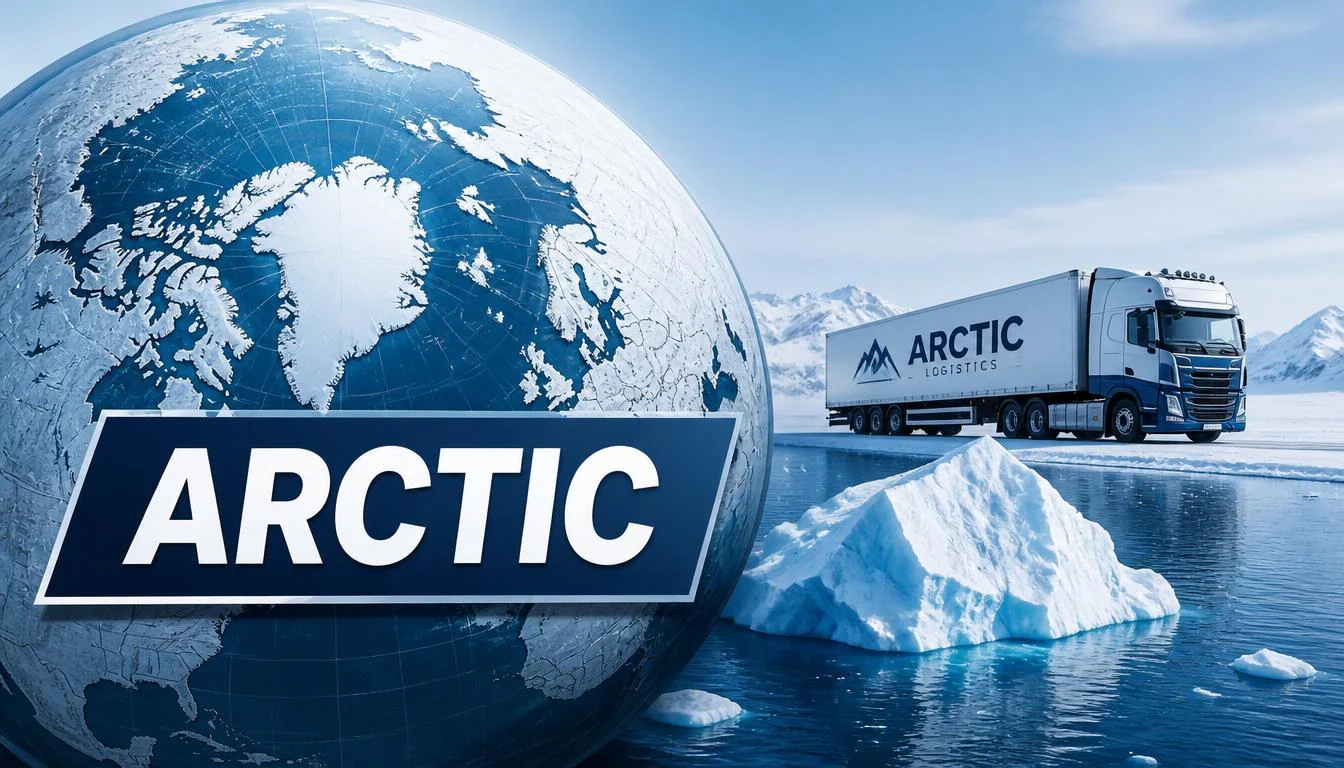
Quick Answer
The correct spelling is Arctic. “Artic” is a common misspelling, though it does exist as a separate word meaning an “articulated lorry” (truck) in British English . For the polar region, freezing temperatures, or anything related to the North Pole, always use Arctic.
Picture this: You are writing an important email, a school essay, or a social media post about the freezing polar region. Suddenly, you stop and stare at your screen, unsure whether to type “arctic” or “artic.” Your spell-checker doesn’t flag either option, yet something feels off. This moment of hesitation happens to countless writers every day. The artic or arctic confusion is surprisingly common, and it stems from a simple pronunciation habit that many people do not even realize they have.
Here is the truth: one of these spellings is correct for describing the icy North Pole, and the other is a misspelling that has unfortunately become widespread. The difference matters more than you might think. Using the wrong word can undermine your credibility and make your writing appear careless. In this article, we will clear up the confusion once and for all. You will learn which spelling is correct, why the mistake happens, and how to remember the right choice so you never second-guess yourself again.
Which One Is Correct?
Arctic is the only correct spelling when referring to the polar region, extremely cold weather, or anything associated with the North Pole. Artic is a misspelling in this context, though it does have a separate legitimate meaning.
The word “Arctic” comes from the Greek arktikos, meaning “of the bear,” referring to the constellation Ursa Major (the Great Bear) . The “c” belongs in the spelling, and it has been there since the word entered English in the late 14th century .
Artic, on the other hand, exists as an informal British abbreviation for an “articulated lorry”—a large truck with a trailer . This usage is correct but entirely unrelated to the polar region.
Meaning of the Correct Word
Definition
Arctic (adjective): Relating to the region around the North Pole, characterized by extremely cold temperatures and ice.
Arctic (noun): The polar region of Earth that surrounds the North Pole, lying north of the Arctic Circle.
Explanation
The Arctic is a geographic region at the top of the globe. It includes parts of Canada, Russia, Greenland, Norway, Sweden, Finland, Iceland, and the United States (Alaska) . The region is defined by the Arctic Circle, an imaginary line at approximately 66.5 degrees north latitude.
Beyond its geographic meaning, “arctic” describes anything bitterly cold, freezing, or suitable for use in extreme winter conditions . For example, “arctic winds” means freezing winds, and “arctic boots” means boots designed for severe cold.
Usage
Use “Arctic” as a proper noun when referring to the specific geographic region (capitalize it). Use “arctic” as a common adjective when describing cold weather or conditions (lowercase is acceptable, though some style guides prefer capitalization).
Common phrases include:
- Arctic Circle
- Arctic Ocean
- Arctic winds
- Arctic conditions
- Arctic exploration
- Arctic animals (polar bears, arctic foxes, walruses)
Real-World Examples
- Scientists have been studying the melting ice caps in the Arctic for decades.
- The expedition team faced arctic temperatures during their trek across the tundra.
- Arctic foxes have thick fur that keeps them warm in subzero conditions.
- Tourists hoping to see the Northern Lights often travel to the Arctic Circle.
- The Arctic Ocean is the smallest and shallowest of the world’s five major oceans.
Meaning of the Incorrect or Alternative Word
Incorrect
Artic is incorrect when used to mean the polar region, freezing temperatures, or anything related to the North Pole. This misspelling appears frequently because of how people pronounce the word.
Typo
In most cases, “artic” is simply a typographical error. Writers who know the correct spelling may accidentally omit the “c” when typing quickly. Spell-checkers usually catch this mistake, though they might not flag “artic” if they recognize it as a valid word in other contexts.
Slang
Artic (noun) is British slang for an articulated lorry a large truck consisting of a cab and a trailer connected by a pivoting joint . In American English, this vehicle is called a “semi truck” or “tractor-trailer.”
Example: “The artic was stuck on the motorway for hours during the snowstorm.”
Rare but Valid Usage
Apart from the British truck abbreviation, “artic” occasionally appears as a brand name, company name, or product name . Some software companies and video game publishers have used “Artic” in their branding. However, these proper nouns are exceptions, not alternatives to the correct spelling of the polar region.
Key Differences Between the Two Words
Common Mistakes People Make
The most frequent error is spelling “Arctic” without the first “c.” This mistake happens because many people pronounce the word as “ar-tic” rather than “arc-tic.”
Why does this happen?
The “c” and “t” sounds in “Arctic” are both “plosives”—sounds that stop airflow briefly . Moving from a “c” to a “t” requires significant tongue movement: the “c” is produced at the back of the mouth, while the “t” is produced at the front. To make pronunciation easier, speakers naturally drop the “c” sound, saying “ar-tic” instead of “arc-tic.”
Other common mistakes:
- Using “artic” in formal writing about geography or climate
- Mispronouncing the word as “ar-tik” without the “k” sound
- Forgetting to capitalize “Arctic” when referring to the region
Correct Usage Examples
Casual Examples
- “I can’t believe how cold it is today it feels positively arctic outside!”
- “Did you see that documentary about the Arctic on Netflix last night?”
- “My cousin is going on an Arctic cruise next summer to see polar bears.”
- “These temperatures are arctic. I need to find my heavy coat.”
Professional Examples
- “The company’s new line of winter gear is designed for arctic conditions and extreme cold.”
- “Our research team will spend six months in the Arctic studying ice core samples.”
- “Arctic shipping routes are becoming more accessible due to climate change.”
- “The report highlights the economic potential of Arctic natural resources.”
Educational Examples
- “The Arctic region experiences 24-hour daylight during summer and 24-hour darkness during winter.”
- “Indigenous peoples have lived in the Arctic for thousands of years, adapting to its harsh environment.”
- “Arctic sea ice reaches its minimum extent in September each year.”
- “The Arctic Circle marks the southernmost latitude where the sun can remain continuously above or below the horizon.”
Literary/Metaphorical Examples
- “Her gaze was arctic, freezing him with a single glance.”
- “The silence in the room was as vast and empty as the Arctic tundra.”
- “He received an arctic reception from his former colleagues after the scandal.”
- “The relationship had cooled to arctic levels; they barely spoke anymore.”
Word Origin / Etymology
The word Arctic entered English in the late 14th century as artik, meaning “of or pertaining to the north pole of the heavens.” It came from Old French artique and directly from Medieval Latin articus, which derived from Latin arcticus.
The Latin came from Greek arktikos, meaning “of the north” or literally “of the bear.” This references the constellation Arktos (Ursa Major or the Great Bear), which is visible in the northern sky and was used for navigation .
Key etymological facts:
- The Greek root arktos means “bear”
- The same root appears in other words like “Antarctic” (opposite the bear)
- The spelling with “c” was restored in the 1550s after a period of omission
- The word has meant “northern” since the early 15th century and “cold, frigid” since the 1660s
Why the Incorrect Version Became Popular
The misspelling “artic” gained popularity for one main reason: pronunciation difficulty .
The linguistic explanation:
The word “Arctic” contains two plosive consonants in a row “c” and “t.” Both require stopping airflow: the “c” at the back of the mouth and the “t” at the front . Moving from one to the other is physically challenging. To simplify, speakers naturally drop the “c” sound, pronouncing it “ar-tic.”
The spelling connection:
When people hear “ar-tic,” they naturally spell what they hear. This phonetic spelling leads to “artic.” Since the pronunciation sounds correct to most ears, the misspelling spreads through written communication .
Other contributing factors:
- Auto-correct sometimes doesn’t flag “artic” because it recognizes the British truck meaning
- Many style guides and dictionaries include both entries, creating confusion
- The word appears frequently in everyday conversation but less often in writing, so people don’t see the correct spelling regularly
Easy Memory Tricks
1. Think of the word “arc”
An arc is part of a circle. The Arctic is at the top of the globe, like the top of a circle. Remember that Arctic contains arc—just like the arc of the Earth’s curve.
2. Associate the “c” with “cold”
The extra “c” in Arctic stands for cold. If you drop the “c,” you are dropping the cold, which doesn’t make sense for a freezing region.
3. Use the mnemonic: “Are we C for cold?”
Ask yourself: “Are we in the Arctic?” The “c” reminds you it is cold there.
4. Notice the pronunciation contrast
Arctic has a harder “k” sound (arc-tic). Artic sounds smoother but is the spelling mistake. Pronounce it carefully with both “c” sounds when you write it.
5. Check the connection to “Antarctic”
The southern polar region is Antarctic. If you can spell that, remember that Arctic follows the same pattern with the “c” before the “t.”
FAQs
What is the correct spelling: artic or arctic?
Arctic is the correct spelling for the polar region and freezing conditions. Artic is a common misspelling, though it means an articulated truck in British slang .
Is the “c” in Arctic silent?
No, the “c” is not silent. The correct pronunciation is “arc-tic” with both “c” sounds. Many people drop the first “c” in speech, which leads to the misspelling “artic” .
Why do people spell it “artic”?
People spell it “artic” because they hear it pronounced that way. The “c” and “t” sounds are difficult to say together, so speakers drop the “c” sound and then spell what they hear .
Does “artic” mean anything?
Yes, artic is an informal British term for an articulated lorry (a large truck with a trailer) . It is not a synonym for the polar region.
How do you pronounce Arctic correctly?
The correct pronunciation is /ˈɑːrk.tɪk/ in American English and /ˈɑːk.tɪk/ in British English. Both have two syllables and stress on the first syllable .
When should I capitalize Arctic?
Capitalize Arctic when it refers to the specific geographic region (e.g., “the Arctic,” “Arctic Circle”). Use lowercase when it means “extremely cold” (e.g., “arctic conditions”) .
What is the origin of the word Arctic?
The word comes from Greek arktikos, meaning “of the bear,” referring to the constellation Ursa Major (the Great Bear) visible in the northern sky .
Are there other common misspellings of Arctic?
The most common misspelling is artic. Others include arctic with three syllables (arc-ti-ic) or arktik, but these are much less frequent .
Conclusion
The correct spelling for the polar region, freezing weather, and anything related to the North Pole is always Arctic. The “c” is not silent it belongs in the word both in writing and in careful pronunciation. Artic, while existing as a British abbreviation for a truck, is an error when used in geographical or cold weather contexts. Remember the “arc” in the Arctic, the icy curve at the top of the globe, and you will never misspell this word again. Keep that “c” for cold, and your writing will stay crisp and correct.
Read More Articles
- Fulfill or Fulfil|British and American English Differences In 2026
- Coliseum or Colosseum | Definition, Examples and Usage In 2026

Jessica Morgan is a blogger and writer at GramScript.com, where she turns everyday ideas into engaging, relatable stories. Her writing blends a natural voice with fresh perspectives that keep readers coming back.