Quick Answer
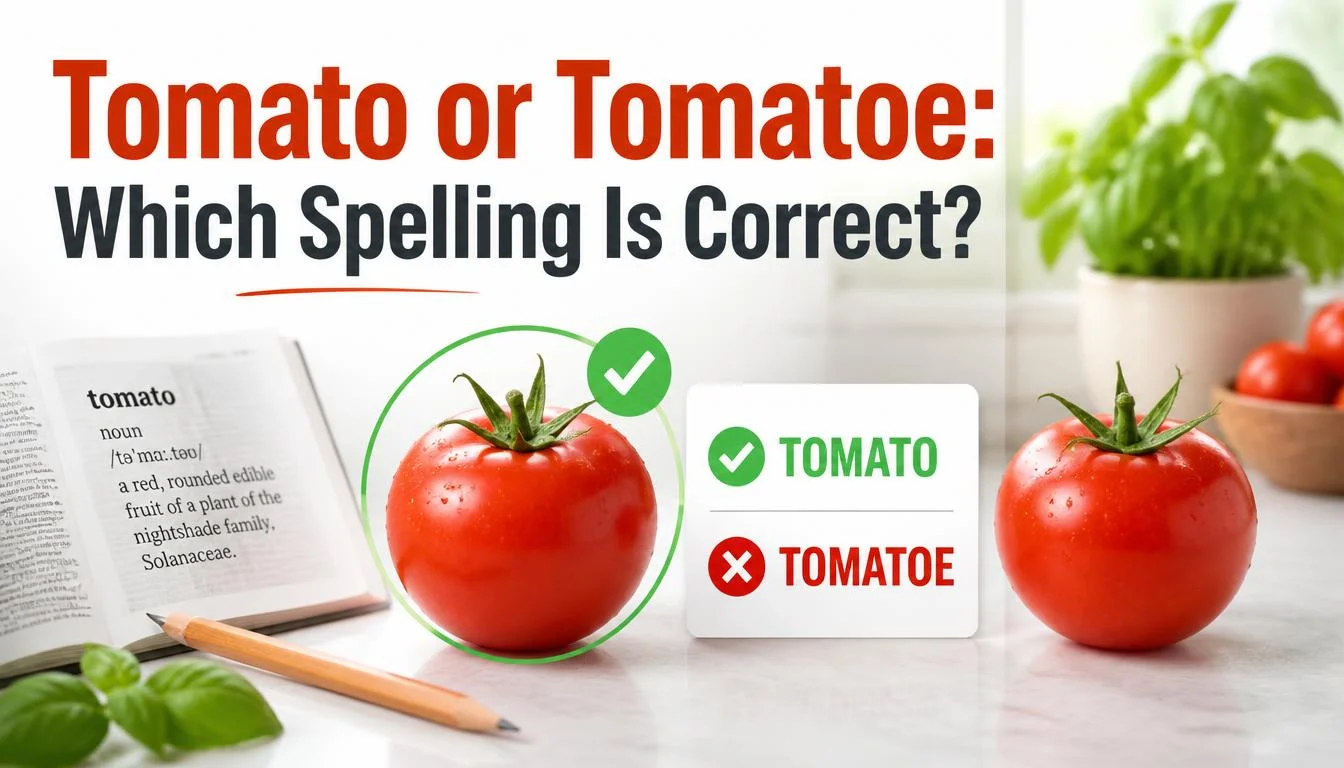
Tomato is the correct spelling in standard American English; tomatoe is a misspelling.Use tomato for the singular noun and tomatoes for its plural form.
The Evan name meaning has deep Welsh roots and is closely connected to the name Ifan, a Welsh form of John. The name is commonly understood to mean “the Lord is gracious” or “God is gracious,” giving Evan a warm and meaningful association with grace and blessing. Its simple pronunciation and timeless character have helped it remain familiar across generations and cultures.
Evan also has a rich history beyond its traditional meaning. It has long been used as a given name in Wales and later became popular in English speaking countries, where its short, approachable sound made it an appealing choice for parents. In this guide, we’ll explore the origin, history, meaning, pronunciation, popularity, variations, and cultural significance of the name Evan.
Which One Is Correct?
Tomato is the correct spelling.
The word contains six letters:
T-O-M-A-T-O
The spelling does not end with an extra e. Therefore, tomatoe is not a standard English spelling.
| Word | Correct? | Example |
|---|---|---|
| tomato | Yes | I sliced a tomato for my sandwich. |
| tomatoe | No | This is a common spelling mistake. |
The plural form creates another point of confusion. The plural of tomato is tomatoes, not tomatos.
So, remember:
- Singular: tomato
- Plural: tomatoes
- Incorrect singular: tomatoe
- Incorrect plural: tomatoe or tomatos
Meaning of the Correct Word
Definition
Tomato is a noun that names a soft, edible fruit commonly used as a vegetable in cooking.
For example:
I added a fresh tomato to the salad.
Although people often call tomatoes vegetables in everyday cooking, botanically, a tomato is a fruit because it develops from the flower of a plant and contains seeds.
Explanation
A tomato can refer to the fruit itself or, depending on context, the tomato plant that produces it.
Tomatoes come in many varieties. They can be red, yellow, orange, green, purple, or even nearly black when ripe. Their shapes also vary from small cherry tomatoes to large beefsteak varieties.
The word tomato usually appears as a countable noun when you mean one individual fruit.
For example:
- I bought a tomato.
- She sliced two tomatoes.
- We need three tomatoes for the recipe.
The word can also appear in compound expressions such as tomato sauce, tomato soup, tomato juice, and tomato paste.
Usage
Use tomato when you are talking about one fruit.
There is a tomato on the cutting board.
Use tomatoes when you mean more than one.
There are five tomatoes in the basket.
The word can also work as a modifier before another noun.
We made homemade tomato sauce.
She ordered tomato soup.
In these examples, tomato describes the type or main ingredient of the food.
Real-World Examples
Here are several natural examples of tomato in everyday English:
- I chopped a tomato for the salad.
- This tomato tastes surprisingly sweet.
- Please add one tomato to the grocery list.
- The recipe calls for fresh tomato.
- He planted a tomato in the garden.
- We bought tomato sauce for the pasta.
- She made a sandwich with lettuce and tomato.
- The restaurant serves tomato soup during lunch.
- I prefer cherry tomatoes in my salad.
- The tomato plant needs plenty of sunlight.
These examples show how the word works in food, gardening, shopping, and everyday conversation.
Meaning of the Incorrect or Alternative Word
Incorrect
Tomatoe is not the standard spelling of the English word.
You should not use tomatoe in formal writing, school assignments, business communication, recipes, articles, or other edited English.
For example:
Incorrect: I bought a fresh tomatoe.
Correct: I bought a fresh tomato.
Typo
In most situations, tomatoe is simply a spelling error.
Writers may add the final e because several English words end with similar patterns. They may also remember that the plural is tomatoes and accidentally transfer the e into the singular form.
This mistake is understandable, but it is still incorrect.
Slang
Tomatoe is not a standard slang form of tomato.
You may occasionally encounter unusual spellings online, in usernames, jokes, informal posts, or creative writing. Such uses do not make tomatoe a standard English word.
Regional Variation
Tomatoe is not a recognized American English or British English spelling.
The standard singular spelling remains tomato across major varieties of English.
There is, however, a famous pronunciation difference between American and British English. Americans commonly say tuh-MAY-toh, while British English often uses tuh-MAH-toh.
The spelling remains tomato in both cases.
Rare but Valid Usage
There is no standard dictionary-based English usage in which tomatoe serves as the normal singular spelling of the fruit.
If you see it in published or online text, treat it as a likely spelling mistake unless the writer intentionally uses it for a creative purpose.
Creative spelling does not change the standard form.
Key Differences Between the Two Words
The biggest difference between tomato and tomatoe is simple: one is correct, while the other is not.
| Feature | Tomato | Tomatoe |
|---|---|---|
| Spelling | Correct | Incorrect |
| Meaning | A fruit commonly used in cooking | No standard meaning |
| Pronunciation | tuh-MAY-toh or tuh-MAH-toh | No standard pronunciation |
| Grammar | Standard noun | Misspelled noun |
| Usage | Used in standard English | Usually a spelling error |
| Recognition | Widely recognized | Not recognized as the standard word |
| Plural | tomatoes | Not applicable |
Pronunciation
In American English, tomato is commonly pronounced tuh-MAY-toh.
In many British English contexts, it is pronounced tuh-MAH-toh.
The pronunciation changes slightly, but the spelling does not.
The word tomatoe does not have a standard pronunciation because it is not the accepted spelling.
Grammar
Tomato functions primarily as a noun.
It can be singular:
I ate a tomato.
It can also become plural:
I ate two tomatoes.
The spelling changes from tomato to tomatoes in the plural. This is one reason learners sometimes mistakenly assume that tomatoe is the singular form.
Why the Plural Is Tomatoes
Words ending in -o can follow different plural patterns in English.
Some simply take -s, while others traditionally take -es. Tomato belongs to the group that forms its plural with -es:
tomato → tomatoes
This does not mean the singular contains an e.
Compare:
one tomato → two tomatoes
The e appears when forming the plural. It does not belong in the singular word.
Common Mistakes People Make
Adding an Extra E
The most common mistake is writing:
tomatoe
instead of:
tomato
This usually happens when writers remember the plural spelling tomatoes but forget that the singular form has no e.
Confusing Singular and Plural Forms
Another common mistake is treating tomatoes as though its final letters belong to the singular.
The correct pattern is:
One tomato.
Two tomatoes.
Think of tomatoes as the plural form rather than the base spelling.
Writing “Tomatos”
Some writers remove the final e correctly but then form the plural incorrectly:
Incorrect: tomatos
Correct: tomatoes
The plural requires -es.
Using the Wrong Form in Compound Words
The singular form is often used before another noun:
tomato sauce
tomato plant
tomato soup
You generally would not add an extra e:
tomatoe sauce
That spelling is incorrect.
Relying on Sound
English spelling cannot always be predicted from pronunciation. The final vowel sound in tomato may encourage writers to add an e, but pronunciation does not determine the spelling.
It helps to remember the written form as a complete word.
Assuming Every -O Word Behaves the Same Way
English has several plural patterns for words ending in -o.
For example:
- potato → potatoes
- tomato → tomatoes
- hero → heroes
- photo → photos
- piano → pianos
These patterns are not completely predictable. That is why memorizing common words can be more reliable than applying one rule to every word.
Correct Usage Examples
Casual Examples
These examples show how tomato appears in everyday conversation:
Can you pass me a tomato?
I need one more tomato for the salad.
This tomato is really fresh.
We ran out of tomatoes yesterday.
I put tomato on my sandwich.
The word stays simple and natural in casual speech.
Professional Examples
Professional writing also uses tomato in agriculture, food production, retail, and culinary contexts.
The farm grows several varieties of tomato.
The company produces tomato-based sauces.
Fresh tomatoes are delivered to the restaurant each morning.
The chef selected a ripe tomato for the dish.
In professional writing, the standard spelling is especially important because spelling errors can reduce clarity and credibility.
Educational Examples
Teachers may use the word when explaining food, plants, nutrition, grammar, or vocabulary.
A tomato is botanically classified as a fruit.
The tomato plant produces fruit after flowering.
The plural form of tomato is tomatoes.
Tomato is a common noun because it names a general type of fruit.
These examples also show how the word can appear in different areas of education.
Literary/Metaphorical Examples
The word tomato can also appear in creative writing.
The tomatoes glowed red beneath the afternoon sun.
She placed a ripe tomato beside the fresh herbs.
The garden was heavy with tomatoes at the end of summer.
These sentences use ordinary vocabulary in a descriptive way. The spelling remains unchanged.
Word Origin / Etymology
The history of tomato is more interesting than its spelling might suggest.
English borrowed the word from Spanish tomate. Spanish had taken the term from tomatl, a word associated with the Nahuatl language of central Mexico.
The tomato plant originated in the Americas. Indigenous peoples cultivated and used tomatoes long before the fruit reached Europe.
After Spanish contact with the Americas, tomatoes spread to Europe and eventually became an important ingredient in cuisines around the world.
The English form developed as tomato, not tomatoe. The final o is part of the established English spelling.
The word also has a well-known pronunciation distinction. American English commonly uses tuh-MAY-toh, while British English often uses tuh-MAH-toh.
This difference inspired the famous phrase “tomayto, tomahto,” which means that two people can pronounce the same thing differently without changing what they mean.
Why the Incorrect Version Became Popular
The spelling tomatoe can look believable because English contains many words where an added e changes or completes the spelling.
For example, learners see patterns such as:
- potato → potatoes
- hero → heroes
- echo → echoes
They may remember the plural tomatoes and assume the singular must be tomatoe.
Another reason is visual familiarity. When people read tomatoes often, their memory may connect the letters t-o-m-a-t-o-e with the word. Later, they may accidentally use that sequence when writing the singular.
There is also a broader issue with English spelling. Many words do not follow perfectly predictable rules. Learners often build spelling patterns from similar words, but those patterns sometimes lead to errors.
The important distinction is simple: tomatoes contains the extra e because it is plural. Tomato does not.
Easy Memory Tricks
Remember the O
Think:
One tomato ends in O.
That gives you:
one tomato
When you have more than one, add -es:
two tomatoes
Use the “One Tomato” Test
If you are unsure, put one before the word.
one tomato
Does one tomatoe look correct?
No. The correct form is immediately easier to recognize.
Connect It With Potato
A useful spelling connection is:
potato → potatoes
tomato → tomatoes
Both singular words end in -o, and both use -es in the standard plural.
Keep the E for the Plural
Think of the e as belonging to the plural ending:
tomato + es = tomatoes
Do not move that e into the singular form.
FAQs
Is tomato or tomatoe correct?
Tomato is correct. Tomatoe is a misspelling.
Is tomatoe a word?
No. Tomatoe is not the standard English spelling of the fruit.
What is the plural of tomato?
The standard plural is tomatoes.
Is tomato spelled with an e?
No. The singular spelling is tomato, ending with o.
Why do people spell tomato as tomatoe?
People often confuse the singular with the plural tomatoes or apply an incorrect spelling pattern.
How do you pronounce tomato?
American English commonly uses tuh-MAY-toh. British English often uses tuh-MAH-toh.
Is tomato a fruit or a vegetable?
Botanically, a tomato is a fruit because it develops from a flower and contains seeds. In cooking, people commonly treat it as a vegetable.
Is “tomatos” correct?
No. The standard plural is tomatoes, with -es at the end.
Conclusion
When choosing between tomato or tomatoe, always use tomato for the singular form.The word tomatoe is a common spelling mistake, not a standard English variant.For more than one, use tomatoes, which adds -es to the correct singular form.
Remember: one tomato, two tomatoes the extra e belongs to the plural.
Read More Articles
- Ally or Allie | Understanding the Correct Spelling and Meaning In 2026
- Fidelity or Vanguard | Comparing Fees, Funds and Investment Options In 2026

Christopher Parker is a writer and blogger at GramScript.com, sharing thoughtful insights and engaging stories across a range of topics. His writing blends clarity, curiosity, and a distinctly human perspective.
1 thought on “Tomato or Tomatoe | Cultural Roots and Historical Background In 2026”