Quick Answer
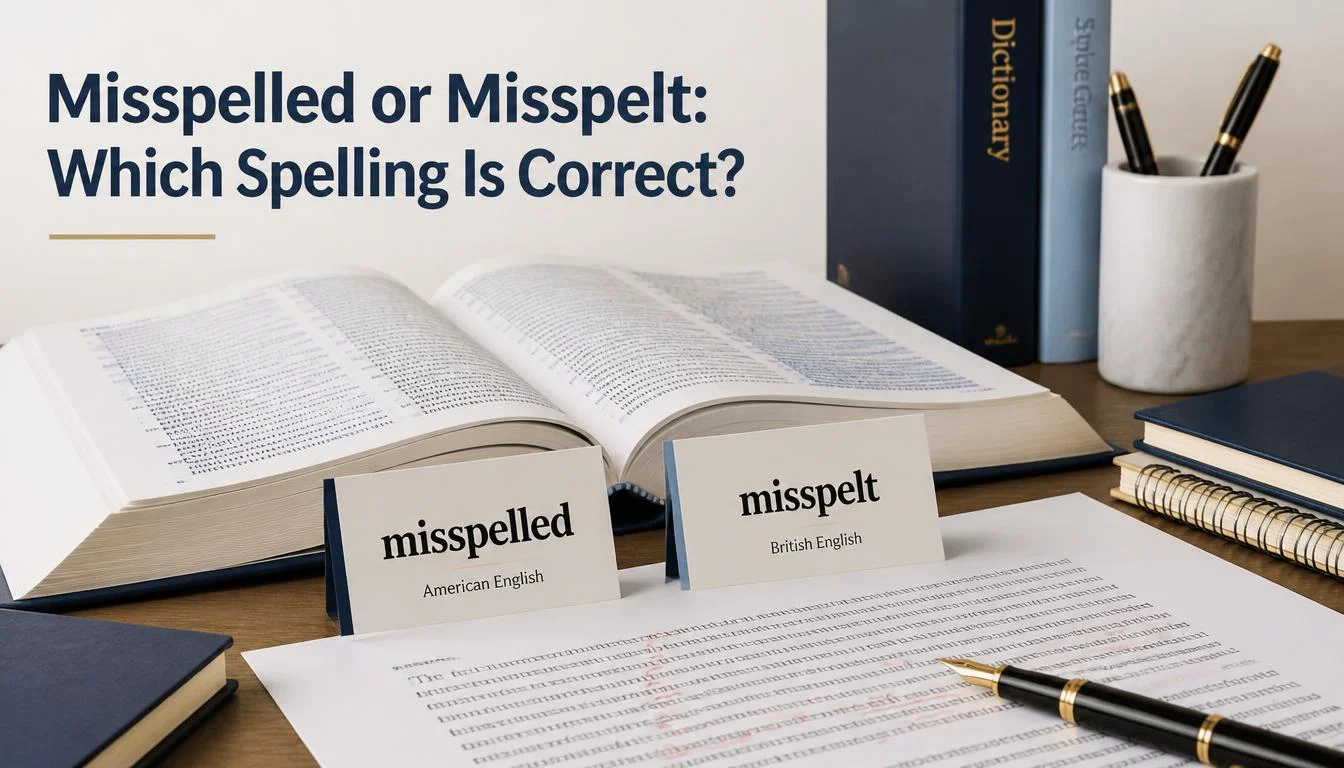
Misspelled is the standard American English spelling, while misspelt is the standard British English variant. Both mean “spelled incorrectly,” but the choice depends mainly on the variety of English you use.
If you have ever wondered whether misspelled or misspelt is the correct form, you are not alone. Both spellings are accepted in English, but they are associated with different varieties of the language. Misspelled is the standard form in American English, while misspelt is commonly used in British English and other varieties influenced by British usage. Both words mean that something has been spelled incorrectly.
The difference becomes easier to understand when you look at the broader pattern of English spelling and verb forms. Just as American English often uses “spelled” while British English may use “spelt,” the same regional distinction applies to “misspelled” and “misspelt.” Understanding where each form is preferred can help you choose the right spelling for your audience, schoolwork, professional writing, or online content.
Which One Is Correct?
Both misspelled and misspelt are correct English forms.
The important point is that they belong to different spelling traditions. Misspelled is the preferred form in American English. Misspelt is traditionally associated with British English.
| Form | Main variety | Correct? |
|---|---|---|
| misspelled | American English; also used in British English | Yes |
| misspelt | British English | Yes |
So, if you follow standard American English, choose misspelled.
For example:
I misspelled her name in the email.
If you are following British English conventions, you may write:
I misspelt her name in the email.
The meaning remains unchanged.
Meaning of the Correct Word
Definition
Misspelled is the American English past tense and past participle of misspell. It means that a word was written with the wrong letters or in an incorrect spelling.
For example:
I misspelled the word “necessary.”
Here, the speaker is saying that the word was spelled incorrectly.
The related noun is misspelling, which means an incorrect spelling or the act of spelling something incorrectly.
Explanation
The word misspelled contains two main parts:
- mis- = wrongly or incorrectly
- spelled = the past form of spell
Together, the word literally suggests spelled incorrectly.
The verb misspell is transitive. That means it normally takes an object.
She misspelled the word.
The object is the word.
You can also use the passive form:
The word was misspelled.
This structure focuses on the word rather than the person who made the error.
Usage
Use misspelled when describing something that someone spelled incorrectly.
Common combinations include:
- misspelled word
- misspelled name
- misspelled term
- misspelled address
- misspelled sentence
- misspelled title
- frequently misspelled word
- commonly misspelled name
The word can appear in casual, academic, professional, and technical writing.
I noticed that I had misspelled the company name.
The student misspelled three words on the test.
The database contains several misspelled entries.
Real-World Examples
Here are natural examples using misspelled:
I accidentally misspelled your last name.
The teacher circled the misspelled word.
My phone corrected the misspelled term automatically.
She realized that she had misspelled the address.
The article contained one misspelled name.
Please check the document for misspelled words before submitting it.
These examples show why misspelled is common in everyday writing. It describes a spelling error without changing the underlying meaning of the word involved.
Meaning of the Incorrect or Alternative Word
Incorrect
Misspelt is not incorrect. It is a legitimate English spelling.
However, it is not the usual spelling in standard American English. British English commonly uses misspelt, while American English generally uses misspelled.
Therefore, calling misspelt simply “wrong” would be misleading.
Typo
A typo is an accidental typing or writing error. Misspelt, by itself, is not a typo.
For example:
I misspelt the word.
This is a correctly formed British English sentence.
A typo would be something like:
I missplet the word.
That spelling does not follow the standard forms misspelled or misspelt.
Slang
Misspelt is not slang. It is a standard verb form used in formal and informal British English.
You can find it in dictionaries and ordinary edited writing. Oxford lists misspelt alongside misspelled as a past-tense and past-participle form of misspell.
Regional Variation
The clearest distinction is regional.
American English favors:
misspell → misspelled
British English commonly allows:
misspell → misspelt
British English also uses misspelled, so the distinction is not absolute. Cambridge specifically gives “misspelled or UK misspelt.”
This pattern resembles other spelling differences between American and British English, where one variety often prefers an -ed form while British usage may retain a shorter form.
Rare but Valid Usage
Misspelt is not a rare or obsolete form. It remains a recognized British English form.
Likewise, misspelled is not exclusively American. British writers can use it too.
The practical rule is simple: follow the spelling system used by your audience, publication, school, or organization.
Key Differences Between the Two Words
The biggest difference between misspelled and misspelt is not meaning. It is spelling preference by variety of English.
| Feature | Misspelled | Misspelt |
|---|---|---|
| Spelling | misspelled | misspelt |
| Meaning | Spelled incorrectly | Spelled incorrectly |
| Pronunciation | miss-SPELLD | miss-SPELT |
| Grammar | Past tense and past participle | Past tense and past participle |
| Main usage | American English | British English |
| Recognition | Widely recognized internationally | Widely recognized, especially in British English |
| Present form | misspell | misspell |
| -ing form | misspelling | misspelling |
Pronunciation
The pronunciation is essentially the same in ordinary speech.
Misspelled is pronounced approximately:
miss-SPELLD
Misspelt is pronounced approximately:
miss-SPELT
The spelling changes the ending, but the core sound of misspell remains the same.
Grammar
Both forms function as the past tense and past participle of misspell.
Present:
I misspell words sometimes.
Past:
I misspelled the word.
British alternative:
I misspelt the word.
Perfect construction:
I have misspelled the word.
British alternative:
I have misspelt the word.
Passive construction:
The name was misspelled.
British alternative:
The name was misspelt.
The grammatical role does not change.
Usage
American English writing normally favors misspelled. British English often favors misspelt.
If you are writing for an international audience, misspelled is broadly understandable. Still, consistency matters. Avoid switching between regional conventions without a reason.
Common Mistakes People Make
Mistake 1: Treating “misspelt” as a spelling error
Some American writers assume misspelt is itself misspelled.
That is not correct. It is a standard British English form.
Mistake 2: Assuming the forms have different meanings
They do not.
Both describe a word that has been spelled incorrectly.
She misspelled the name.
She misspelt the name.
The meaning is the same.
Mistake 3: Mixing regional conventions
A document may use American spelling throughout and suddenly use misspelt.
That is not necessarily grammatically wrong, but it can create inconsistency.
If your writing follows American English, misspelled is usually the natural choice.
Mistake 4: Using “misspell” for a completed action
The base verb describes the action in the present.
I often misspell difficult words.
For a completed action, use the past form:
I misspelled a difficult word yesterday.
Mistake 5: Confusing “misspell” with “misspelling”
Misspell is a verb.
Did I misspell this word?
Misspelling is a noun.
I found a misspelling in the report.
This distinction is useful because the two words often appear together.
Mistake 6: Forgetting the double “s”
The correct forms begin with:
misspell
misspelled
misspelt
misspelling
The first part comes from mis-, followed by spell.
Correct Usage Examples
Casual Examples
I think I misspelled your name.
Did I misspell that word?
Sorry, I misspelled it in my last message.
I always misspell that difficult surname.
My phone caught the misspelled word before I sent the text.
These examples fit everyday conversation, messaging, and informal writing.
Professional Examples
Please review the document for misspelled names.
The customer’s address was misspelled on the invoice.
I noticed that the company name was misspelled in the report.
The final version contains no obvious misspelled terms.
Please correct any misspelled words before publication.
In professional writing, misspelled is especially useful when discussing proofreading, editing, documents, records, and correspondence.
Educational Examples
The student misspelled the word “environment.”
The teacher asked the class to identify the misspelled words.
Several students misspelled the same vocabulary term.
Check your paragraph for misspelled words before turning it in.
The spelling exercise includes ten commonly misspelled words.
Teachers and students often use misspelled when discussing writing accuracy.
Literary/Metaphorical Examples
Although misspell is usually literal, it can occasionally be used creatively.
He felt as if grief had misspelled his name across the page of his life.
Here, misspelled is metaphorical. It suggests that something has been represented incorrectly.
Such usage is stylistic rather than grammatical. In ordinary writing, the literal meaning remains much more common.
Word Origin / Etymology
The history of misspell helps explain why the word has such a straightforward structure.
The verb misspell dates from the 1650s and developed from mis- plus spell. The prefix mis- has Germanic roots and conveys the idea of something being wrong, bad, or mistaken.
The verb spell is much older. Historical sources trace its development through Middle English forms such as spellen. Earlier meanings included reading letters one by one and forming words with letters. The meaning connected specifically with forming words correctly developed over time.
The noun misspelling appeared later, around the 1690s, as a noun formed from misspell. It refers to an incorrect spelling or the act of spelling incorrectly.
This history gives the modern word a transparent structure:
mis- + spell → misspell → misspelled / misspelt
The difference between misspelled and misspelt developed as part of broader variation in English verb forms. English contains many verbs with competing -ed and shorter forms, especially across British and American usage.
Why the Incorrect Version Became Popular
It is better to call misspelt an alternative regional form rather than an incorrect version.
British English has a long tradition of using shorter past-tense forms for certain verbs. Examples include forms such as learnt, dreamt, and spelt. American English often prefers the corresponding -ed forms, such as learned, dreamed, and spelled, although actual usage varies by word and context.
This pattern helps explain why English speakers encounter both misspelled and misspelt.
The spelling misspelt also follows the established British form spelt. Meanwhile, American English commonly uses spelled. Oxford records both past forms for misspell, while Cambridge identifies misspelled as the American form and misspelt as the UK form.
So the popularity of misspelt is not the result of a typo or informal internet spelling. It reflects a genuine regional convention.
Easy Memory Tricks
Think “American = -ed”
If you are writing American English, remember:
misspell → misspelled
The longer -ed ending is the form you will normally want.
Think “British = spelt”
For British English, remember the familiar word:
spelt
Then add the miss- prefix:
miss + spelt = misspelt
Remember the meaning stays the same
Do not try to memorize two different definitions.
Both forms mean:
to spell a word incorrectly
Only the preferred spelling changes.
Use the matching pair
For American English:
spell → spelled → misspell → misspelled
For British English:
spell → spelt → misspell → misspelt
This simple pattern makes the difference easier to remember.
FAQs
Is “misspelled” or “misspelt” correct?
Both are correct. Misspelled is standard in American English, while misspelt is a standard British English form.
Is “misspelt” British or American?
Misspelt is primarily associated with British English. American English normally uses misspelled.
Is “misspelled” correct in British English?
Yes. British English uses misspelt, but misspelled is also recognized and used.
Do misspelled and misspelt mean the same thing?
Yes. Both mean that a word has been spelled incorrectly.
Which spelling should Americans use?
American writers should generally use misspelled for standard American English.
How do you pronounce misspelled?
It is pronounced approximately miss-SPELLD.
How do you pronounce misspelt?
It is pronounced approximately miss-SPELT.
What is the noun form of misspell?
The noun is misspelling, meaning an incorrect spelling or the act of spelling incorrectly.
Conclusion
When choosing between misspelled or misspelt, remember that both forms are correct, but they reflect different English conventions.Misspelled is the standard choice for American English, while misspelt is commonly used in British English.The meaning and grammatical function remain the same, so the key is to match the spelling to your audience and writing style.
When in doubt in American English, choose misspelled: same meaning, standard spelling, clear communication.
Read More Articles
- Hide or Hid | Understanding Their Meanings and Uses In 2026
- Coyote or Fox | How Their Features and Habits Differ In 2026

Andrew Cooper is a blogger and writer at Gramscript.com, turning everyday ideas into clear, engaging stories. His writing blends curiosity, insight and a genuinely human perspective.
2 thoughts on “Misspelled or Misspelt | Grammar, Meaning and Regional Usage In 2026”