Quick Answer
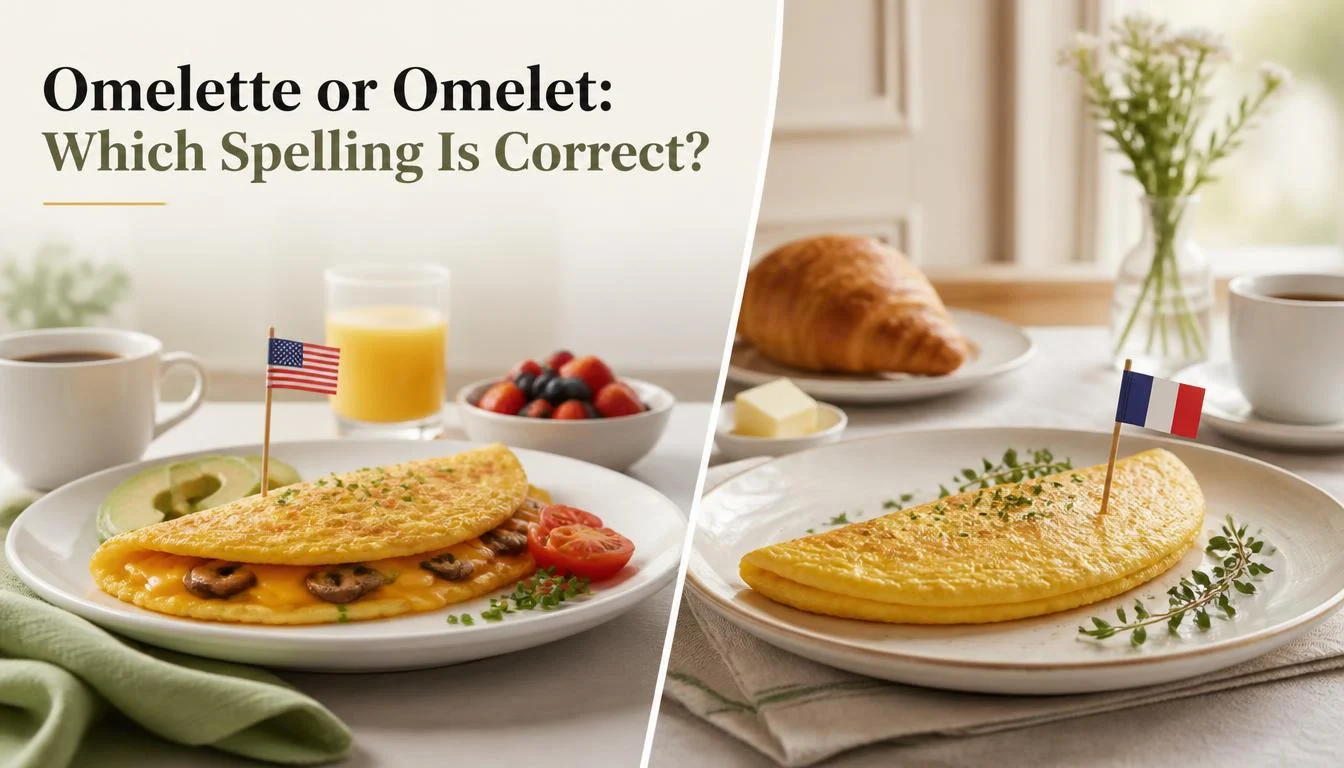
Both omelette and omelet are correct spellings, but omelet is the standard American English form.Omelette is more common in British English and closely follows the original French spelling.
If you have ever wondered whether omelette or omelet is the correct spelling, you are not alone. Both forms are correct, but the spelling you choose depends mainly on the variety of English you are using. Omelet is the standard spelling in American English, while omelette is more common in British English and several other varieties of English.
The two words have the same meaning and refer to a dish made by cooking beaten eggs, often with ingredients such as cheese, vegetables, herbs, or meat. The difference is simply a matter of spelling and regional usage. Understanding where each form is preferred can help you choose the right version for an American English article, a British English text, a menu, or everyday writing.
Which One Is Correct?
Both omelet and omelette are correct.
The choice depends mainly on the variety of English you are using:
- Omelet is the standard spelling in American English.
- Omelette is the traditional spelling in British English and several other varieties.
- Both words describe the same egg dish.
- Both function as nouns.
- Neither spelling is a typo when used in the appropriate regional context.
If you are writing for an American audience, omelet is usually the better choice. For British English, omelette is the more familiar form.
The distinction is similar to other regional spelling differences. English sometimes keeps two accepted forms because different countries developed different spelling conventions. The meaning does not change simply because one spelling contains an extra -te.
For example:
I ordered a cheese omelet for breakfast.
This sentence fits standard American English.
In British English, you might see:
I ordered a cheese omelette for breakfast.
Both sentences communicate the same idea.
Meaning of the Correct Word
Definition
An omelet is a dish made by cooking beaten eggs in a pan until they become firm. Cooks often fold the eggs around a filling or add ingredients before serving.
Common omelet fillings include:
- Cheese
- Mushrooms
- Onions
- Tomatoes
- Spinach
- Peppers
- Ham
- Bacon
- Fresh herbs
The dish can appear at breakfast, brunch, lunch, or dinner.
Explanation
The American spelling omelet contains only one t at the end. It is not a shortened form with a different meaning. It is simply the standard American spelling of the word.
The spelling can describe many types of omelets. A restaurant might serve a vegetable omelet, a cheese omelet, or a three-egg omelet.
The word can also appear before another noun as a modifier:
She ordered an omelet sandwich.
Here, omelet still refers to the egg dish.
Usage
Use omelet when your writing follows American English conventions.
You will commonly see it in:
- American cookbooks
- U.S. restaurant menus
- American food blogs
- School assignments written in American English
- U.S. newspapers and magazines
- Everyday American conversation
The plural form is usually omelets.
For example:
The café serves several different omelets.
The spelling stays straightforward because the plural simply adds -s.
Real-World Examples
Here are some natural examples:
I made a cheese omelet before work.
The breakfast menu includes a spinach omelet.
He added fresh herbs to the omelet.
We ordered two omelets and a stack of pancakes.
This omelet is filled with mushrooms and cheddar cheese.
These examples follow standard American spelling.
Meaning of the Incorrect or Alternative Word
The other spelling deserves a closer look because omelette is not actually incorrect.
Incorrect
Omelette is not incorrect.
It is a standard and widely recognized spelling, especially in British English. Calling it wrong in all contexts would create a false distinction.
If your audience uses American English, however, omelette may look less consistent with the spelling conventions normally used in U.S. writing.
Typo
Omelette is not a typo when someone intentionally follows British English.
A writer using American English might choose omelet because it is the conventional U.S. form. However, seeing omelette does not automatically indicate a spelling mistake.
Slang
Neither omelet nor omelette is slang.
Both are standard dictionary forms used in formal and informal writing. The difference concerns regional spelling rather than social status or level of formality.
Regional Variation
Regional usage provides the clearest explanation.
American English generally favors omelet, while British English traditionally favors omelette. The longer spelling also appears in other English-speaking regions and international contexts.
You may therefore see:
American English: omelet
British English: omelette
This does not mean every speaker follows the pattern perfectly. English usage varies between individuals, publications, restaurants, and countries.
Rare but Valid Usage
Omelette can appear in American writing, particularly when a writer wants to preserve a French or European flavor.
For example, a French restaurant in the United States might use omelette on its menu. That choice does not make the dish or spelling incorrect.
Likewise, omelet can sometimes appear outside the United States. Regional preferences are strong, but they are not absolute rules.
Key Differences Between the Two Words
The two forms have almost no difference in meaning. Their main distinction involves spelling and regional preference.
| Feature | Omelet | Omelette |
|---|---|---|
| Spelling | American form | British and traditional form |
| Meaning | Egg dish | Egg dish |
| Pronunciation | Usually “OM-uh-let” | Usually “OM-uh-let” |
| Grammar | Noun | Noun |
| Usage | Common in American English | Common in British English |
| Recognition | Widely recognized worldwide | Widely recognized worldwide |
| Meaning difference | None | None |
| Plural | Omelets | Omelettes |
Spelling
The most obvious difference is the final -te.
Omelet has one t at the end.
Omelette has -tte at the end.
This small difference does not create a different word meaning.
Meaning
Both forms describe the same food.
If someone says they ate an omelet and another person says they ate an omelette, they are not describing two different dishes simply because of the spelling.
Pronunciation
In ordinary English speech, the two spellings are generally pronounced in the same way.
A simple pronunciation guide is:
Omelet: “OM-uh-let”
Omelette: “OM-uh-let”
The spelling difference is therefore much more noticeable in writing than in speech.
Grammar
Both forms are nouns.
They can work as the subject or object of a sentence:
The omelet looks delicious.
I ordered an omelette.
They can also appear after adjectives:
The fluffy omelet was ready in minutes.
She made a delicious omelette.
Usage
The best choice depends on your intended variety of English.
For American English, choose omelet.
For British English, omelette is generally the more familiar choice.
Consistency matters most. If the rest of your article follows American spelling, omelet will usually fit better.
Recognition
Both spellings are widely recognizable.
Even readers who normally use omelet will usually understand omelette, and vice versa. The difference rarely causes confusion in meaning.
Common Mistakes People Make
Assuming One Spelling Is Always Wrong
The most common mistake is treating one form as universally correct and the other as universally incorrect.
English does not work that way here. Both forms have established usage.
Using British Spelling in an American Text Without a Reason
If you are writing an American English article, consistency matters. Using omelette alongside American spellings can make your writing look inconsistent.
For example, if your text uses American forms such as color, favorite, and center, then omelet usually fits the same style.
Changing the Pronunciation Because of the Spelling
The extra letters in omelette can make learners think it has a different pronunciation.
In normal English usage, the two forms sound essentially the same.
Thinking Omelette Refers to a Different Recipe
The spelling does not determine the recipe.
A cheese omelet and a cheese omelette can contain the same ingredients and use the same cooking method.
Confusing the Word With a Recipe Name
Sometimes a specific dish has a special name, such as a French-style omelette. The word omelette itself does not automatically identify one exact recipe.
Recipes can differ in texture, filling, shape, and cooking method.
Assuming Restaurant Menus Must Use American Spelling
Restaurants often choose language based on branding, culinary tradition, or the style of cuisine they serve.
An American restaurant may use omelette to create a French or European feel. That does not necessarily reflect the spelling used throughout the restaurant’s other content.
Correct Usage Examples
Casual Examples
I had an omelet for breakfast.
Can you make me a cheese omelet?
This omelet tastes amazing.
She makes great vegetable omelets.
I usually order an omelet when we go out for brunch.
These examples use the standard American form.
In British English, the same sentences can use omelette instead.
Professional Examples
The restaurant offers a spinach and mushroom omelet.
Our breakfast menu includes three specialty omelets.
The chef prepared a light herb omelet for the guests.
The hotel serves made-to-order omelets during breakfast.
For American professional writing, omelet keeps the spelling consistent with U.S. conventions.
Educational Examples
An omelet is made by cooking beaten eggs in a pan.
Students can learn basic cooking skills by preparing a simple omelet.
The recipe calls for two eggs, cheese, and fresh vegetables.
An omelet can provide protein as part of a balanced meal.
These examples show how the word works in informational writing.
Literary/Metaphorical Examples
The word omelet can also appear in creative writing when food helps establish a setting.
Morning sunlight spilled across the table beside her half-finished omelet.
The smell of a fresh omelet filled the small kitchen.
He folded the omelet carefully while the family talked around him.
These examples use the word naturally without changing its meaning.
Word Origin / Etymology
The history of omelet and omelette helps explain why both spellings exist.
The English word ultimately comes from French omelette, the name for the familiar egg dish. French spelling influenced the traditional English form, which helps explain the ending -ette.
The history of the French word itself is more complicated. Historical sources have connected it with older French forms related to the preparation of eggs, including forms associated with words such as alumelle. The exact path of the modern spelling has changed over time, so it is better to describe the history carefully rather than claim a single simple origin.
As the word entered and developed in English, different spelling traditions emerged. American English eventually favored the shorter omelet, while British English retained the French-looking omelette more strongly.
This pattern appears elsewhere in English. American spelling sometimes removes letters or simplifies forms that British English keeps. These differences developed through long-term language change rather than through a single spelling reform.
The two forms therefore share the same linguistic history. They are not unrelated words that happen to describe the same food.
Why the Incorrect Version Became Popular
Since omelette is not actually incorrect, it is better to ask why the alternative spelling became common.
The answer lies largely in the history of English and its relationship with French.
English has borrowed thousands of words from French. Some retained spellings that closely resemble French forms, while others developed simpler English spellings over time.
American English has often favored simplified spellings in certain groups of words. In this case, omelet became the established American form, while omelette remained common in British usage.
Food culture also plays a role. The dish has strong connections with French cooking, so the French-looking spelling can feel natural in culinary contexts.
You may therefore encounter omelette in American restaurants, especially when the menu emphasizes French cuisine. The choice can reflect style rather than a mistake.
The important point is that spelling preference does not change the definition. Both forms refer to the same type of egg dish.
Easy Memory Tricks
Remembering the difference is simple once you connect each spelling with its regional style.
Think “American = Shorter”
For American English, remember:
omelet = shorter spelling
If you are writing for a U.S. audience, the shorter form is usually the easiest choice.
Think “French-Looking = Omelette”
The spelling omelette looks closer to French.
That can help you remember why it appears frequently in British English and culinary contexts influenced by French usage.
Focus on the Extra Letters
Look at the endings:
omelet → one t
omelette → tte
If you are unsure which one to use in American English, choose the shorter spelling.
Remember That Both Are Correct
The most useful memory trick is also the simplest:
American: omelet. British: omelette.
You do not need to memorize two definitions because there is only one basic meaning.
Use Consistency
If you are writing an American English article, use omelet throughout.
If you are writing in British English, use omelette throughout.
Consistency makes your writing feel polished and intentional.
FAQs
Is omelet or omelette correct?
Both are correct. Omelet is the standard American spelling, while omelette is common in British English.
Is omelet American or British?
Omelet is the standard American English spelling. British English generally prefers omelette.
Is omelette an American spelling?
It can appear in American writing, but omelet is the usual American form. Omelette is more strongly associated with British and French usage.
Do omelet and omelette mean the same thing?
Yes. Both words refer to the same egg dish, usually made from beaten eggs cooked in a pan.
How do you pronounce omelet?
Omelet is commonly pronounced “OM-uh-let.” The British spelling, omelette, is generally pronounced the same way.
What is the plural of omelet?
The American plural is omelets. The British form is usually omelettes.
Should I use omelet in American English?
Yes. If you are following standard American English, omelet is the preferred spelling.
Why does omelette have extra letters?
The spelling omelette reflects the word’s French origin and remains common in British English and other varieties.
Conclusion
When comparing omelette or omelet, both spellings are correct, but omelet is the standard American form.Use omelette when following British English or when a French style spelling fits your context.The two words share the same meaning, pronunciation, and grammatical function.Remember: American writing favors omelet, while British writing commonly keeps omelette.
Read More Articles
- Neighbor or Neighbour | Meaning, Spelling and Usage In 2026
- Payer or Payor | Meaning, Spelling and Proper Usage In 2026

Christopher Parker is a writer and blogger at GramScript.com, sharing thoughtful insights and engaging stories across a range of topics. His writing blends clarity, curiosity, and a distinctly human perspective.