Quick Answer
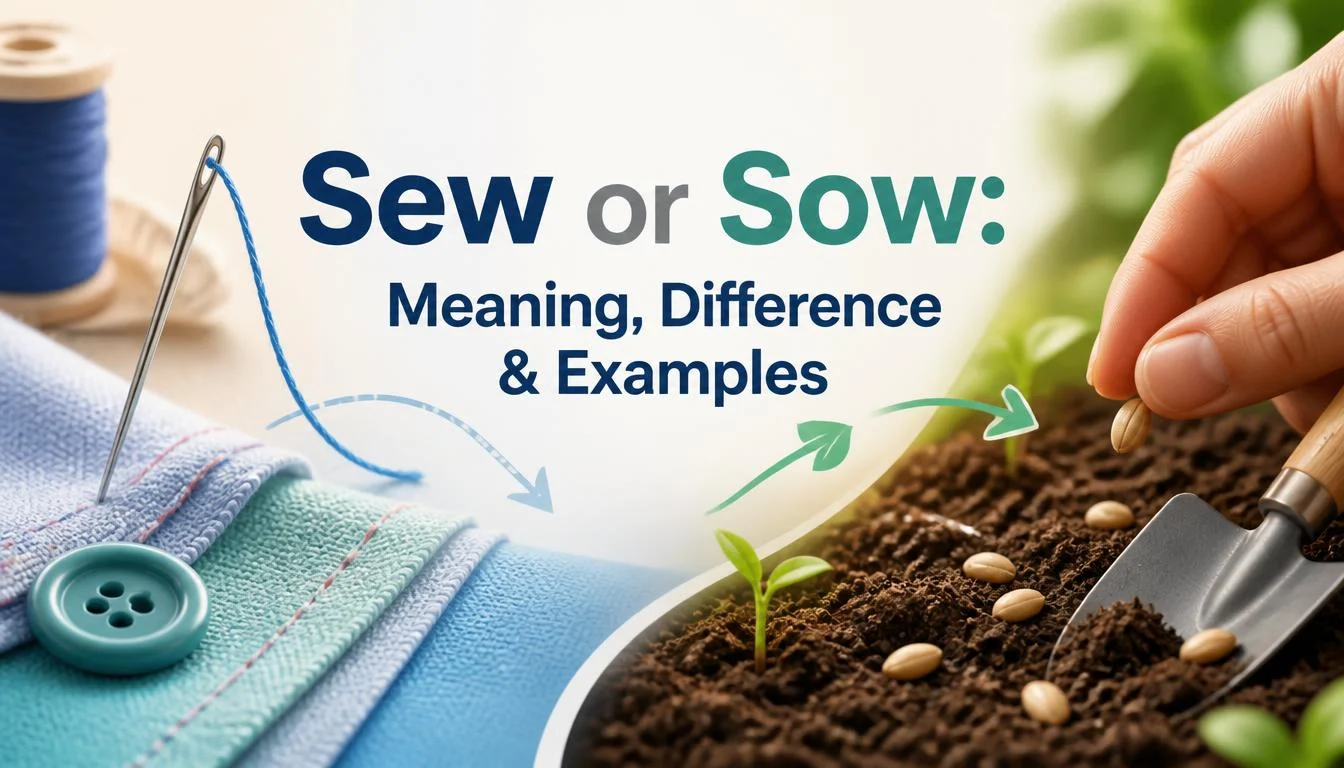
Sew means to join or repair fabric with a needle and thread, while sow means to plant seeds or spread something.They sound different and have completely different meanings, so the correct choice depends on the context.
Sew or sow can be confusing because these words sound the same in some contexts, but they have completely different meanings and uses. Sew relates to joining or repairing fabric with a needle and thread, while sow usually means planting seeds in the ground. Knowing the difference can help you choose the correct word when writing or speaking.
The easiest way to remember them is to connect each word with its action. You sew clothes, fabric, or pieces of material together, while you sow seeds so plants can grow. In this guide, you’ll learn the meanings, pronunciations, examples, and practical differences between sew and sow, so you can use each word confidently and correctly.
Which One Is Correct?
Both sew and sow are correct English words. Neither spelling is a general mistake or a misspelling of the other.
The important point is that they perform different jobs. Use sew when you mean working with fabric, thread, or a needle. Use sow when you mean planting seeds or spreading something that may develop later.
| Word | Main meaning | Example |
|---|---|---|
| sew | Join or repair fabric with thread | I need to sew this button back on. |
| sow | Plant seeds in soil | We will sow the seeds in spring. |
A useful distinction is simple: sew belongs to sewing and clothing, while sow belongs to planting and growth.
Meaning of the Correct Word
Definition
Sew is a verb that means to join, repair, or decorate material by passing thread through it with a needle or similar tool.
You can sew clothes, curtains, blankets, buttons, bags, or other fabric items. The word can describe both hand sewing and machine sewing.
For example:
My grandmother taught me how to sew.
Here, sew describes the action of using thread and a needle to create or repair something.
Explanation
The verb sew focuses on connecting materials with thread. The action may involve making something new or fixing something that has already been made.
You can sew two pieces of fabric together. You can also sew a button onto a shirt or sew a small tear closed.
The word can also appear in figurative or extended expressions. For example, someone may sew up a deal, which means to secure or finalize it. This expression does not involve actual thread.
The pronunciation can cause confusion because sew does not follow the pronunciation many learners might expect from its spelling.
When it means joining fabric, sew is pronounced like “soh.”
Usage
Sew is normally used as a verb.
Common forms include:
- sew present form
- sews third person singular present
- sewed simple past
- sewn or sewed past participle, depending on the construction
- sewing present participle
Examples:
- I sew by hand.
- She sews dresses for children.
- He sewed the tear yesterday.
- The pieces have been sewn together.
- They are sewing a new costume.
In standard usage, sewn commonly appears after forms of have or be, especially when describing a completed result.
Real-World Examples
You may encounter sew in many practical situations:
- Clothing: She can sew a beautiful dress.
- Repairs: I need to sew this loose seam.
- Crafts: We learned to sew small decorations onto the fabric.
- Tailoring: The tailor will sew the sleeves onto the jacket.
- Home projects: My mother likes to sew curtains.
- Education: Students learned basic sewing skills in class.
These contexts all involve fabric, thread, stitching, or a similar form of needlework.
Meaning of the Incorrect or Alternative Word
Incorrect
Sow is not an incorrect spelling of sew. It becomes incorrect only when a writer uses it in a sentence that requires the meaning of sew.
For example:
❌ I need to sow this button onto my shirt.
This sentence is incorrect because buttons are attached with thread. The correct sentence is:
✅ I need to sew this button onto my shirt.
However, sow is perfectly correct when the sentence involves planting or spreading.
Typo
A person may accidentally type sow when they intend to write sew. This often happens during quick writing because both words have the same number of letters and similar spelling patterns.
Context usually reveals the mistake.
❌ She knows how to sow a dress.
✅ She knows how to sew a dress.
The first sentence suggests planting a dress, so the intended meaning is obvious.
Slang
Sow is not a slang version of sew. You should not use sow as an informal alternative when talking about stitching fabric.
Likewise, sew does not function as slang for planting seeds.
Each word has its own established meaning.
Regional Variation
The distinction between sew and sow does not represent a standard American-versus-British spelling difference.
American English uses sew for needlework and sow for planting. British English follows the same basic distinction.
The words remain separate because their meanings differ, not because different English-speaking regions spell them differently.
Rare but Valid Usage
Sow has another valid meaning that has nothing to do with planting crops.
As a verb, it can mean to spread something that may produce a result later.
For example:
Her speech sowed doubt among the audience.
The speaker did not plant physical seeds. Instead, the speech introduced doubt that could grow in people’s minds.
Sow can also function as a noun for a mature female pig.
That meaning is less relevant to the common sew or sow confusion, but it helps explain why sow has several established uses.
Key Differences Between the Two Words
| Feature | Sew | Sow |
|---|---|---|
| Spelling | sew | sow |
| Main meaning | Join fabric with thread | Plant seeds |
| Pronunciation | “soh” | “sow” rhymes with “how” |
| Grammar | Mainly a verb | Verb and noun |
| Common context | Clothing, fabric, stitching | Farming, gardening, spreading |
| Example | She will sew the dress. | They will sow the seeds. |
| Recognition | Connected with needlework | Connected with planting |
The pronunciation provides one of the easiest ways to separate them.
When sew refers to stitching, it sounds like “soh.” This is the same basic sound found in the word so.
The verb sow, when it means planting, sounds like “sow” as in “how.” The vowel sound is different from sew.
Consider these sentences:
I will sew the torn sleeve.
I will sow the flower seeds.
The first action uses thread. The second action puts seeds into the ground.
Common Mistakes People Make
Confusing Fabric With Farming
The most common mistake occurs when writers remember the general sound but forget the meaning.
If the sentence mentions fabric, thread, needles, stitching, clothes, or buttons, sew is usually the word you need.
If it mentions seeds, soil, crops, gardens, fields, or planting, choose sow.
Choosing the Word by Spelling Alone
English contains many words whose spelling does not directly reveal their pronunciation. Sew provides a good example.
A learner may see the letters sew and try to pronounce them as “syoo” or “seh-w.” Instead, the verb is pronounced like “soh.”
Learning the word with its sound and meaning prevents this mistake.
Using Sow for Sewing
Consider this sentence:
❌ My aunt taught me how to sow clothes.
The sentence needs sew because the action involves making or repairing clothes.
Correct:
✅ My aunt taught me how to sew clothes.
Using Sew for Planting
The reverse mistake also occurs:
❌ We will sew the seeds tomorrow.
This sentence describes planting, so sow is correct.
✅ We will sow the seeds tomorrow.
Forgetting the Figurative Meaning of Sow
Not every use of sow involves a garden.
You can sow doubt, sow fear, sow confusion, or sow the seeds of change.
These expressions describe the beginning or spread of something that may produce consequences later.
Correct Usage Examples
Casual Examples
- I learned to sew when I was a teenager.
- Can you sew this button back on?
- Grandma likes to sew in the evening.
- We are going to sow some herbs in the garden.
- Dad will sow the vegetable seeds tomorrow.
- I need to sew this small tear before I wear the shirt.
These examples reflect ordinary conversations about hobbies, clothing, gardening, and household tasks.
Professional Examples
- The tailor will sew the lining into the jacket.
- The designer plans to sew the final details by hand.
- Farmers usually sow seeds according to seasonal conditions.
- The company plans to sow the fields before the rainy period.
- Skilled workers sew each garment according to the production pattern.
Professional contexts often use sew in fashion and manufacturing and sow in agriculture.
Educational Examples
- Students learned how to sew a simple seam.
- The teacher showed the class how to sew a button.
- Children planted seeds after learning how to sow them correctly.
- The science lesson explained why farmers sow crops at particular times.
- Students compared the words sew and sow during their vocabulary exercise.
These examples show how both words can appear in classroom materials while referring to completely different actions.
Literary/Metaphorical Examples
The verb sow often appears in figurative writing because planting naturally suggests future results.
- His careless words sowed doubt among his friends.
- Small acts of kindness can sow hope.
- The decision sowed the seeds of future conflict.
- Her encouragement sowed confidence in the young student.
- The leader’s actions sowed distrust within the organization.
By contrast, sew usually keeps its literal connection to fabric, although expressions such as sew up can develop figurative meanings.
For example:
The team sewed up the agreement before the deadline.
Here, sewed up means secured or finalized something. It does not describe actual stitching.
Word Origin / Etymology
The history of sew reaches back to Old English and related Germanic words connected with stitching. Over centuries, its spelling and pronunciation changed while its central meaning remained associated with joining material with thread.
The modern pronunciation may seem surprising because English spelling preserves historical features that no longer match everyday speech. The w in sew does not produce the sound many learners might expect.
The history of sow is different. The verb comes from an old Germanic word associated with scattering or planting seed. Its meaning developed around placing seeds in the ground so that crops could grow.
The figurative sense of sow, meaning to introduce or spread something such as doubt or conflict, follows naturally from this agricultural idea. A person can plant an idea in someone’s mind in much the same way a farmer plants a seed in soil.
The two words therefore have separate histories despite their similar appearance.
Why the Incorrect Version Became Popular
The so-called “incorrect version” often appears because sew and sow are easy to confuse when someone remembers only their spelling or sound.
English has many words that create similar problems. Some words share pronunciations, while others share spellings or differ by only one letter.
The unusual pronunciation of sew makes this pair especially tricky. A learner may recognize the word from writing but never hear it spoken. Another learner may hear the word first and choose the spelling sow because it seems to match the sound.
The reverse can happen with sow. Someone familiar with sewing may automatically connect the letters sew with any sentence involving a sound like “so.”
Context solves the problem quickly. Think about the action rather than the sound alone.
If someone is working with a needle, use sew. If someone is planting seeds, use sow.
Easy Memory Tricks
Think “Sew = Stitch”
Both words point toward fabric and needlework.
Sew → Stitch → Shirt
If you can connect sew with a shirt or stitch, you are less likely to choose sow.
Think “Sow = Seeds”
The phrase sow seeds is a common combination.
Sow → Seeds → Soil
When the sentence involves putting seeds into soil, sow is the natural choice.
Remember the Sounds
Sew sounds like “soh.”
Sow sounds like “sow” in “how.”
This pronunciation difference can help you identify the intended word when you hear someone speak.
Use the Result Test
Ask yourself what result the action produces.
If the action produces a stitched or repaired piece of fabric, choose sew.
If the action puts seeds into the ground, choose sow.
This simple test works even when you are unsure about pronunciation.
FAQs
Is it sew or sow a dress?
The correct phrase is sew a dress because making a dress involves joining fabric with thread.
Is sew pronounced like so?
Yes. When sew means to stitch, it is pronounced like “soh.”
Is sow pronounced like now?
No. The verb sow is pronounced with a sound that rhymes with how, not now.
What does sow mean in English?
Sow means to plant seeds. It can also mean to spread something that may produce a later result.
Can sow mean sewing?
No. Sow does not mean stitching or joining fabric with thread.
Can sew be used for planting?
No. Use sow when you mean planting seeds or spreading something figuratively.
What is the past tense of sew?
The simple past is usually sewed. The past participle can be sewn or sewed, depending on the construction.
What is the difference between sow and sew?
Sew means to join fabric with thread, while sow means to plant seeds or spread something that may develop later.
Conclusion
Understanding sew or sow becomes easy when you connect each word with its action and meaning.Use sew for stitching fabric, clothes, buttons, or other materials with thread.Use sow for planting seeds or spreading ideas, feelings, and influences that may grow over time.Remember: sew makes stitches, while sow starts growth.
Read More Articles
- Publicly or Publically | Meaning, Spelling and Usage In 2026
- Bridge or Implant | How These Two Tooth Replacement Options Compare In 2026

Christopher Parker is a writer and blogger at GramScript.com, sharing thoughtful insights and engaging stories across a range of topics. His writing blends clarity, curiosity, and a distinctly human perspective.